Pedro Flores · The Duncan Demonstrators · Joe Radovan · Tommy Reyes
The yo-yo craze that swept America started with Filipino immigrants who knew the toy from home and turned tricks into a profession. This is their story, as told on the history exhibit created by Robert Reyes, son of yo-yo champion Tommy Reyes. Tommy later performed on kids' TV right here in Washington, D.C. and Baltimore.
The text below is reproduced as printed on the exhibit's four banners and name board. Each section includes a photo of the original. Tap any photo to see it full size.
Banner text is reproduced as printed. The “Sources & Further Reading” lists under each banner were added by DMV Throwers from other published records, so you can check the history for yourself.
Banner 1
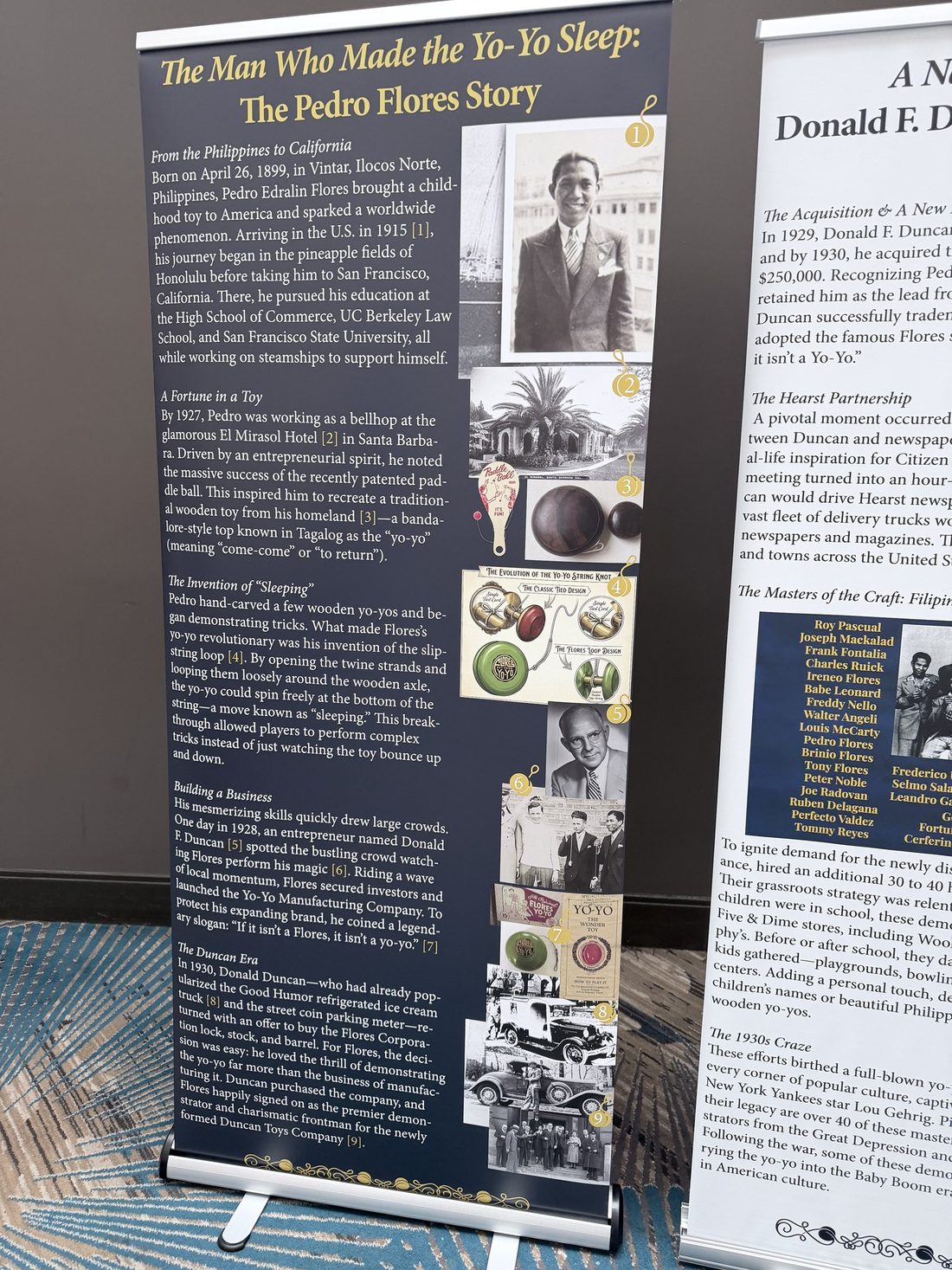
The Man Who Made the Yo-Yo Sleep: The Pedro Flores Story
Photo of the original banner. Tap to enlarge.
From the Philippines to California
Born on April 26, 1899, in Vintar, Ilocos Norte, Philippines, Pedro Edralin Flores brought a childhood toy to America and sparked a worldwide phenomenon. Arriving in the U.S. in 1915 [1], his journey began in the pineapple fields of Honolulu before taking him to San Francisco, California. There, he pursued his education at the High School of Commerce, UC Berkeley Law School, and San Francisco State University, all while working on steamships to support himself.
A Fortune in a Toy
By 1927, Pedro was working as a bellhop at the glamorous El Mirasol Hotel [2] in Santa Barbara. Driven by an entrepreneurial spirit, he noted the massive success of the recently patented paddle ball. This inspired him to recreate a traditional wooden toy from his homeland [3]—a bandalore-style top known in Tagalog as the “yo-yo” (meaning “come-come” or “to return”).
The Invention of “Sleeping”
Pedro hand-carved a few wooden yo-yos and began demonstrating tricks. What made Flores’s yo-yo revolutionary was his invention of the slip-string loop [4]. By opening the twine strands and looping them loosely around the wooden axle, the yo-yo could spin freely at the bottom of the string—a move known as “sleeping.” This breakthrough allowed players to perform complex tricks instead of just watching the toy bounce up and down.
Building a Business
His mesmerizing skills quickly drew large crowds. One day in 1928, an entrepreneur named Donald F. Duncan [5] spotted the bustling crowd watching Flores perform his magic [6]. Riding a wave of local momentum, Flores secured investors and launched the Yo-Yo Manufacturing Company. To protect his expanding brand, he coined a legendary slogan: “If it isn’t a Flores, it isn’t a yo-yo.” [7]
The Duncan Era
In 1930, Donald Duncan—who had already popularized the Good Humor refrigerated ice cream truck [8] and the street coin parking meter—returned with an offer to buy the Flores Corporation lock, stock, and barrel. For Flores, the decision was easy: he loved the thrill of demonstrating the yo-yo far more than the business of manufacturing it. Duncan purchased the company, and Flores happily signed on as the premier demonstrator and charismatic frontman for the newly formed Duncan Toys Company [9].
Bracketed numbers match the numbered photos on the banner.
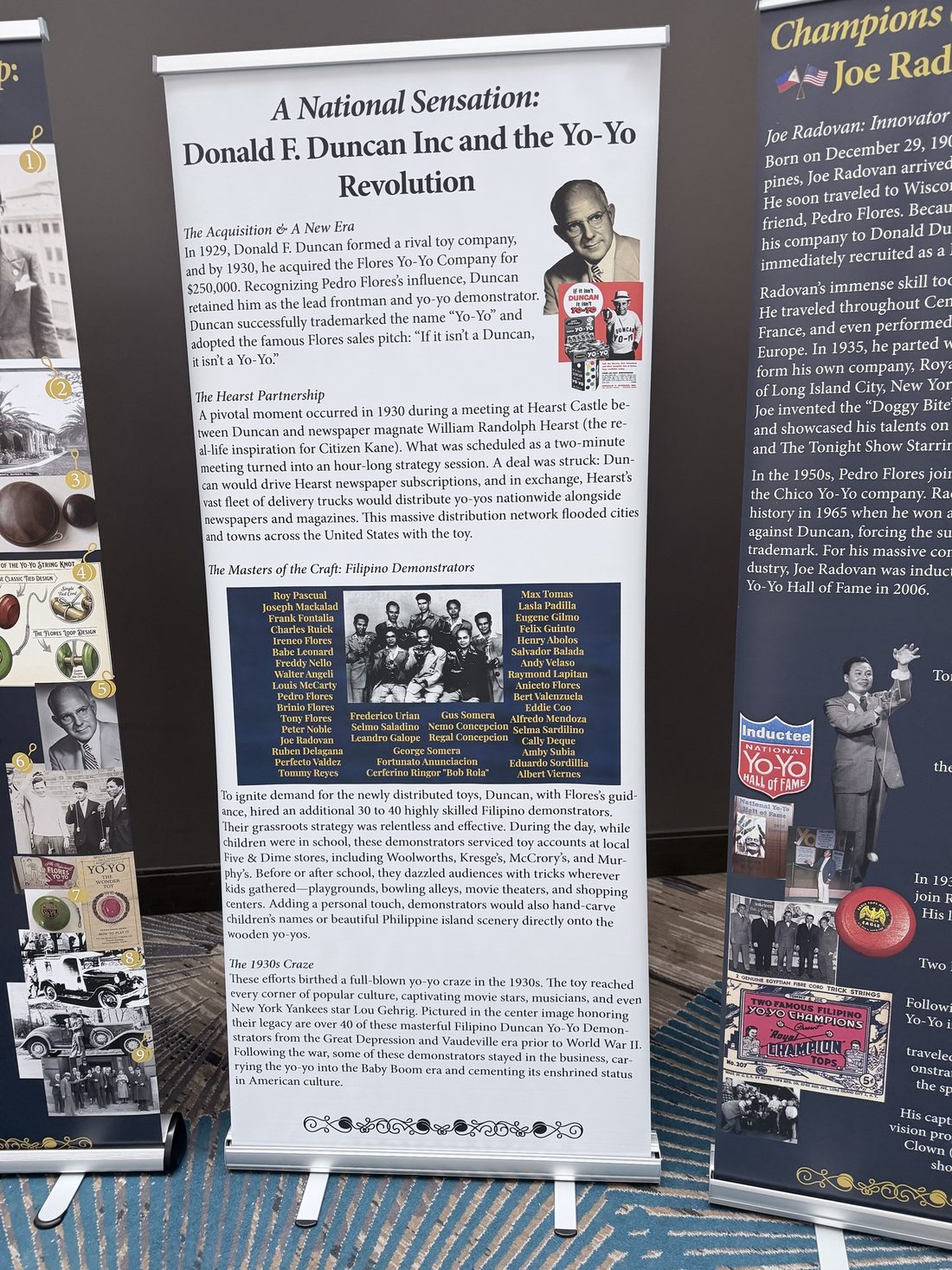
A National Sensation: Donald F. Duncan Inc and the Yo-Yo Revolution
Photo of the original banner. Tap to enlarge.
The Acquisition & A New Era
In 1929, Donald F. Duncan formed a rival toy company, and by 1930, he acquired the Flores Yo-Yo Company for $250,000. Recognizing Pedro Flores’s influence, Duncan retained him as the lead frontman and yo-yo demonstrator. Duncan successfully trademarked the name “Yo-Yo” and adopted the famous Flores sales pitch: “If it isn’t a Duncan, it isn’t a Yo-Yo.”
The Hearst Partnership
A pivotal moment occurred in 1930 during a meeting at Hearst Castle between Duncan and newspaper magnate William Randolph Hearst (the real-life inspiration for Citizen Kane). What was scheduled as a two-minute meeting turned into an hour-long strategy session. A deal was struck: Duncan would drive Hearst newspaper subscriptions, and in exchange, Hearst’s vast fleet of delivery trucks would distribute yo-yos nationwide alongside newspapers and magazines. This massive distribution network flooded cities and towns across the United States with the toy.
The Masters of the Craft: Filipino Demonstrators
The banner shows a group photo framed by the demonstrators’ names. The names match the name board in The Demonstrators, by Name below.
To ignite demand for the newly distributed toys, Duncan, with Flores’s guidance, hired an additional 30 to 40 highly skilled Filipino demonstrators. Their grassroots strategy was relentless and effective. During the day, while children were in school, these demonstrators serviced toy accounts at local Five & Dime stores, including Woolworths, Kresge’s, McCrory’s, and Murphy’s. Before or after school, they dazzled audiences with tricks wherever kids gathered—playgrounds, bowling alleys, movie theaters, and shopping centers. Adding a personal touch, demonstrators would also hand-carve children’s names or beautiful Philippine island scenery directly onto the wooden yo-yos.
The 1930s Craze
These efforts birthed a full-blown yo-yo craze in the 1930s. The toy reached every corner of popular culture, captivating movie stars, musicians, and even New York Yankees star Lou Gehrig. Pictured in the center image honoring their legacy are over 40 of these masterful Filipino Duncan Yo-Yo Demonstrators from the Great Depression and Vaudeville era prior to World War II. Following the war, some of these demonstrators stayed in the business, carrying the yo-yo into the Baby Boom era and cementing its enshrined status in American culture.
Sources & Further Reading
A Rich History of a Simple Toy Called the Yo-Yo — Duncan Toys blog, 2023; Duncan’s account of the Hearst contests (50,000 new subscriptions in six weeks in Chicago) and its traveling demonstrator teams
Champions of the String: The Legacy of Joe Radovan & Tommy Reyes
Photo of the original banner. Tap to enlarge.
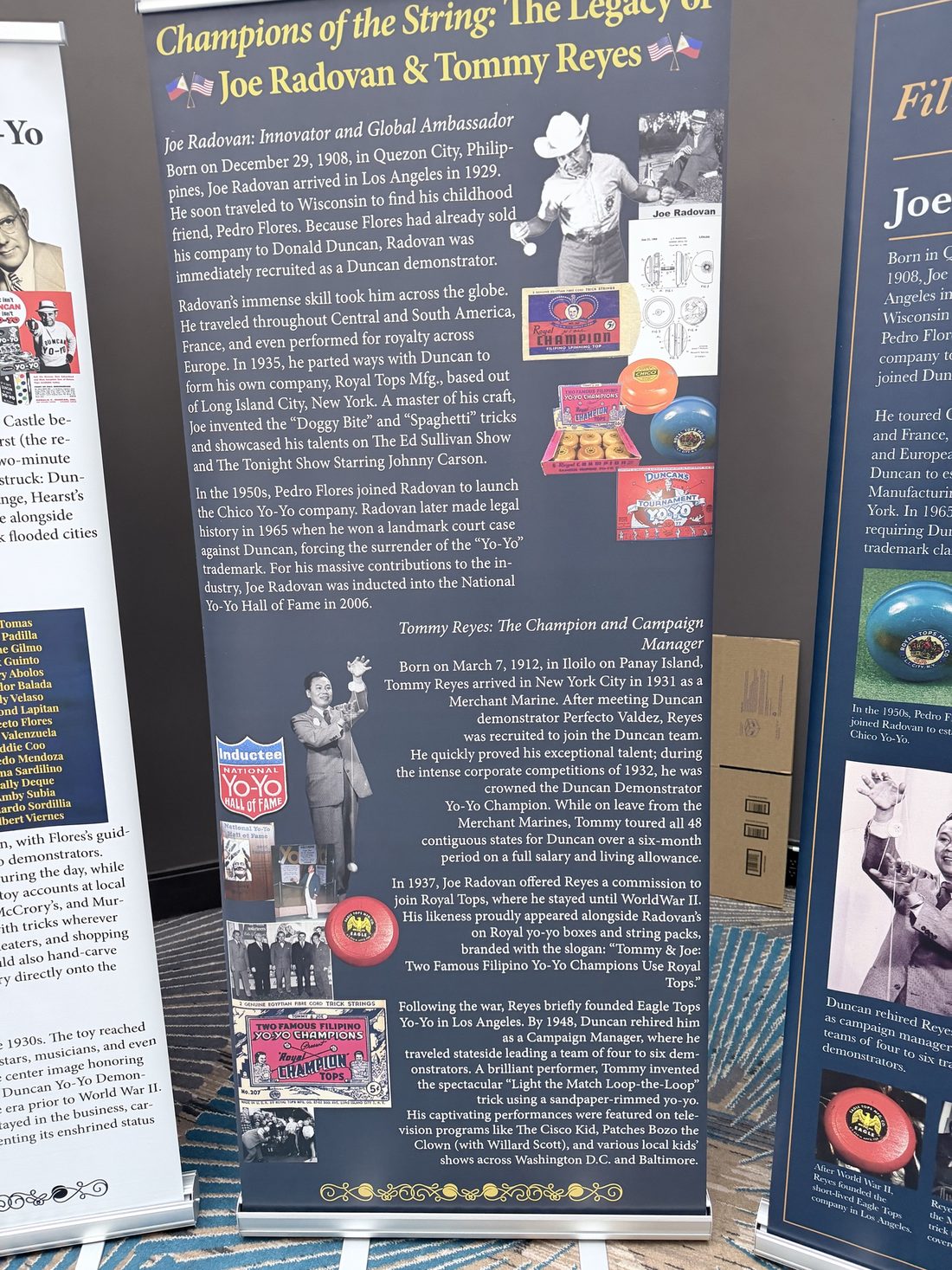
Joe Radovan: Innovator and Global Ambassador
Born on December 29, 1908, in Quezon City, Philippines, Joe Radovan arrived in Los Angeles in 1929. He soon traveled to Wisconsin to find his childhood friend, Pedro Flores. Because Flores had already sold his company to Donald Duncan, Radovan was immediately recruited as a Duncan demonstrator.
Radovan’s immense skill took him across the globe. He traveled throughout Central and South America, France, and even performed for royalty across Europe. In 1935, he parted ways with Duncan to form his own company, Royal Tops Mfg., based out of Long Island City, New York. A master of his craft, Joe invented the “Doggy Bite” and “Spaghetti” tricks and showcased his talents on The Ed Sullivan Show and The Tonight Show Starring Johnny Carson.
In the 1950s, Pedro Flores joined Radovan to launch the Chico Yo-Yo company. Radovan later made legal history in 1965 when he won a landmark court case against Duncan, forcing the surrender of the “Yo-Yo” trademark. For his massive contributions to the industry, Joe Radovan was inducted into the National Yo-Yo Hall of Fame in 2006.
Tommy Reyes: The Champion and Campaign Manager
Born on March 7, 1912, in Iloilo on Panay Island, Tommy Reyes arrived in New York City in 1931 as a Merchant Marine. After meeting Duncan demonstrator Perfecto Valdez, Reyes was recruited to join the Duncan team. He quickly proved his exceptional talent; during the intense corporate competitions of 1932, he was crowned the Duncan Demonstrator Yo-Yo Champion. While on leave from the Merchant Marines, Tommy toured all 48 contiguous states for Duncan over a six-month period on a full salary and living allowance.
In 1937, Joe Radovan offered Reyes a commission to join Royal Tops, where he stayed until World War II. His likeness proudly appeared alongside Radovan’s on Royal yo-yo boxes and string packs, branded with the slogan: “Tommy & Joe: Two Famous Filipino Yo-Yo Champions Use Royal Tops.”
Following the war, Reyes briefly founded Eagle Tops Yo-Yo in Los Angeles. By 1948, Duncan rehired him as a Campaign Manager, where he traveled stateside leading a team of four to six demonstrators. A brilliant performer, Tommy invented the spectacular “Light the Match Loop-the-Loop” trick using a sandpaper-rimmed yo-yo. His captivating performances were featured on television programs like The Cisco Kid, Patches Bozo the Clown (with Willard Scott), and various local kids’ shows across Washington D.C. and Baltimore.
Willard Scott — Wikipedia; he played Bozo on WRC-TV in Washington, DC, 1959–1962
Banner 4
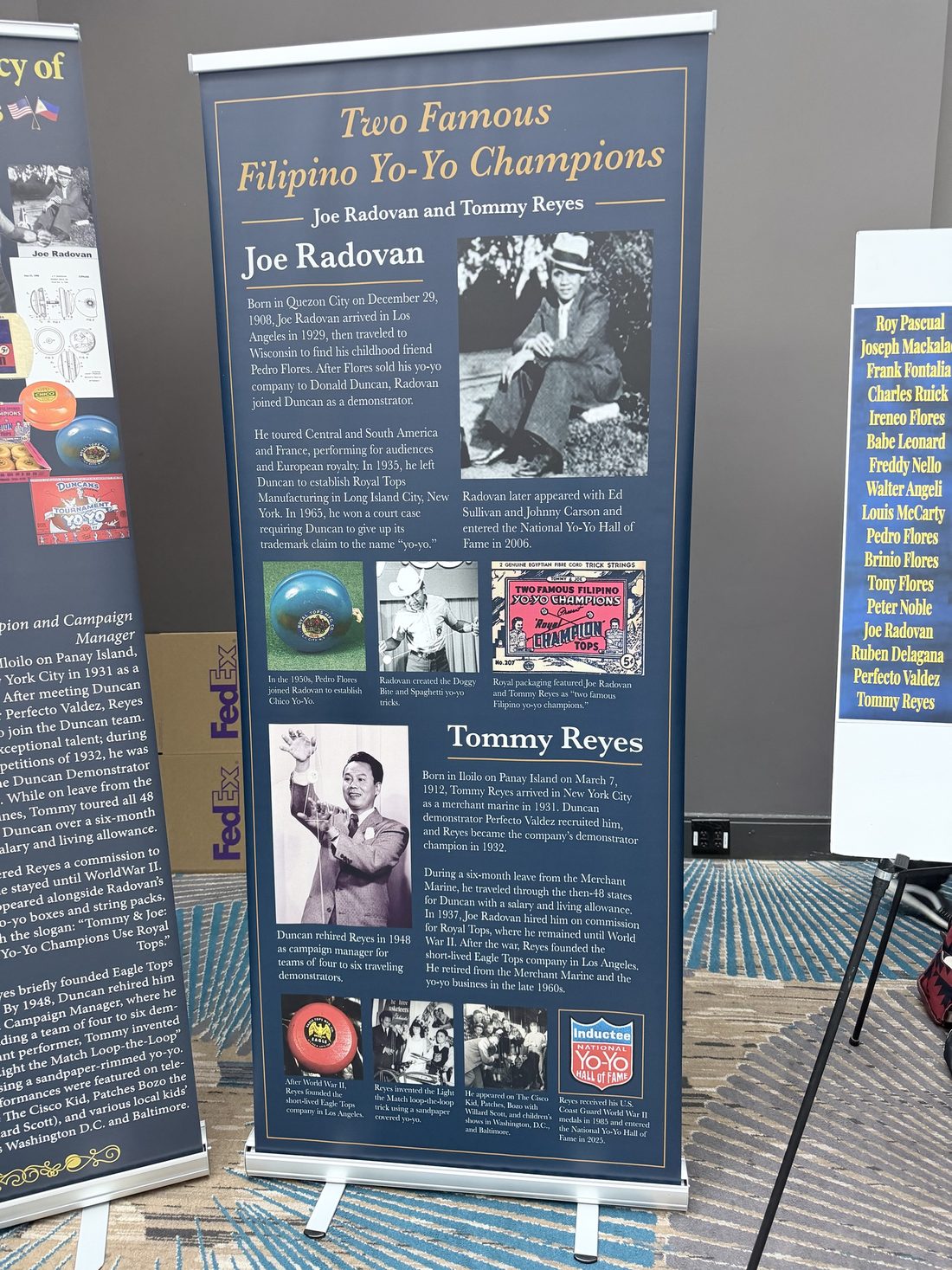
Two Famous Filipino Yo-Yo Champions
Joe Radovan and Tommy Reyes
Photo of the original banner. Tap to enlarge.
Joe Radovan
Born in Quezon City on December 29, 1908, Joe Radovan arrived in Los Angeles in 1929, then traveled to Wisconsin to find his childhood friend Pedro Flores. After Flores sold his yo-yo company to Donald Duncan, Radovan joined Duncan as a demonstrator.
He toured Central and South America and France, performing for audiences and European royalty. In 1935, he left Duncan to establish Royal Tops Manufacturing in Long Island City, New York. In 1965, he won a court case requiring Duncan to give up its trademark claim to the name “yo-yo.”
Radovan later appeared with Ed Sullivan and Johnny Carson and entered the National Yo-Yo Hall of Fame in 2006.
In the 1950s, Pedro Flores joined Radovan to establish Chico Yo-Yo.
Radovan created the Doggy Bite and Spaghetti yo-yo tricks.
Royal packaging featured Joe Radovan and Tommy Reyes as “two famous Filipino yo-yo champions.”
Tommy Reyes
Born in Iloilo on Panay Island on March 7, 1912, Tommy Reyes arrived in New York City as a merchant marine in 1931. Duncan demonstrator Perfecto Valdez recruited him, and Reyes became the company’s demonstrator champion in 1932.
During a six-month leave from the Merchant Marine, he traveled through the then-48 states for Duncan with a salary and living allowance. In 1937, Joe Radovan hired him on commission for Royal Tops, where he remained until World War II. After the war, Reyes founded the short-lived Eagle Tops company in Los Angeles. He retired from the Merchant Marine and the yo-yo business in the late 1960s.
Duncan rehired Reyes in 1948 as campaign manager for teams of four to six traveling demonstrators.
After World War II, Reyes founded the short-lived Eagle Tops company in Los Angeles.
Reyes invented the Light the Match loop-the-loop trick using a sandpaper covered yo-yo.
He appeared on The Cisco Kid, Patches, Bozo with Willard Scott, and children’s shows in Washington, D.C., and Baltimore.
Reyes received his U.S. Coast Guard World War II medals in 1985 and entered the National Yo-Yo Hall of Fame in 2025.
Sources for this banner are listed under Banner 3.
Name Board
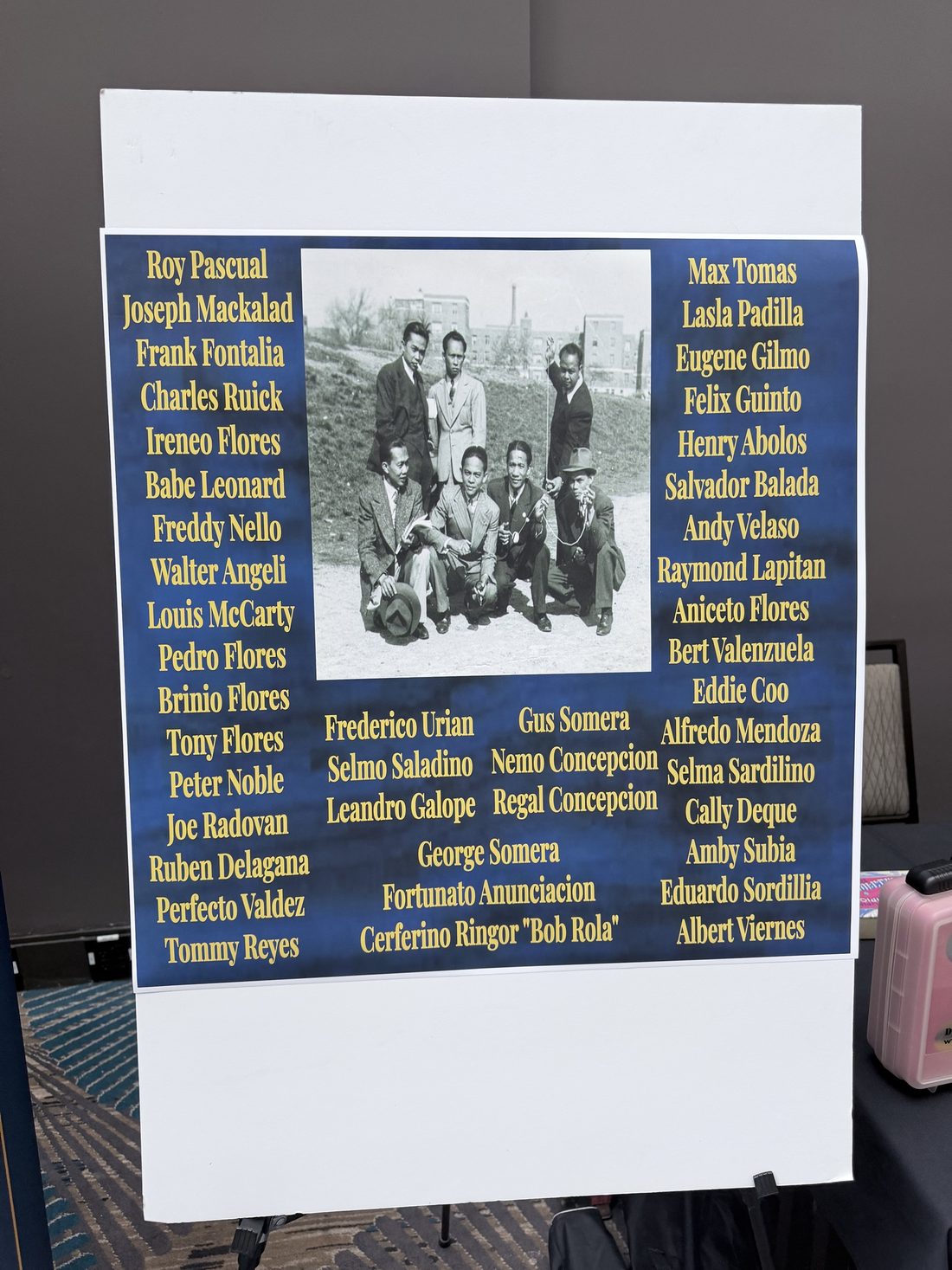
The Demonstrators, by Name
Photo of the original name board. Tap to enlarge.
The exhibit’s name board lists these Filipino Duncan yo-yo demonstrators, in the order shown (left column, center, right column):
Underlined names have their own pages on the fan-built YoYo Wiki. Nemo Concepcion stars in Yo-Yo Man, a 1978 documentary posted by Duncan. Pedro Flores (2003), Joe Radovan (2006), and Gus Somera (2007) are in the National Yo-Yo Hall of Fame.
Bob Rule Papers — Smithsonian, including a file on Gus Somera
Beyond the Banners
Behind the Names: More from the Record
This section is not part of the exhibit. It collects facts about people on the name board from other published sources, linked below each one.
Tommy Reyes in the Smithsonian
The Duncan Family Yo-Yo Collection at the National Museum of American History, right here in DC, includes an addition of 35 photographs documenting Tommy Reyes, donated by Robert Reyes in 2017. The Hall of Fame lists him as Thomas C. Reyes (1912–1994) and inducted him in 2025.
Joe Radovan left Duncan in the 1930s and opened the Royal Tops Manufacturing Company in Long Island City, New York, with his old friend Ruben Delagana as his partner. Duncan later sued Royal over the word “yo-yo.” In 1965 a federal appeals court ruled for Royal, and “yo-yo” became a word anyone could use.
One of the original Filipino Duncan demonstrators recruited by Pedro Flores. His real name was Sotero Parpanea; Somera was his lifelong performing name. His career as a demonstrator spanned six decades. He entered the Hall of Fame in 2007.
Frederico Urian, Brinio Flores, and Albert Viernes
Federico “Fred” Urian came to the U.S. in 1929 at 18. In 1932 in Chicago, the Flores brothers taught him and some 30 other Filipino students seven basic tricks, and they went to work demonstrating for Duncan in five-and-dime store windows. Urian later helped found the Filipino Club of Chicago. The same article names Brinio Flores and Albert Viernes Sr.
A Duncan demonstrator of Filipino origin, featured in the 1978 documentary Yo-Yo Man.
Text reproduced as printed on the history exhibit banners and name board created by Robert Reyes, son of Tommy Reyes, and shared with his permission. Have a correction or a story to add? Email contact@dmvthrowers.club.